Agriculture
Agriculture
  • HOME
  • ABOUT US
  • DEPARTMENTS/UNITS
    • Agriculture
    • Cooperatives
  • CRESAP
  • PARTNERS IN DEVELOPMENT
    • Statutory Bodies
    • International Partners
  • CDF PROJECTS
    • Belize Covered Structure and Capacity Enhancement Project
    • Belize Honey Production Re- Development Support Project
  • DOCUMENT CENTER
  • HOME
  • ABOUT US
  • DEPARTMENTS/UNITS
    • Agriculture
    • Cooperatives
  • CRESAP
  • PARTNERS IN DEVELOPMENT
    • Statutory Bodies
    • International Partners
  • CDF PROJECTS
    • Belize Covered Structure and Capacity Enhancement Project
    • Belize Honey Production Re- Development Support Project
  • DOCUMENT CENTER
Link Enlarge

Aquaculture

Aquaculture

Goal

Facilitate the development of the small-scale tilapia farming industry to meet the local market demand of Tilapia and supply other niche markets.

Background

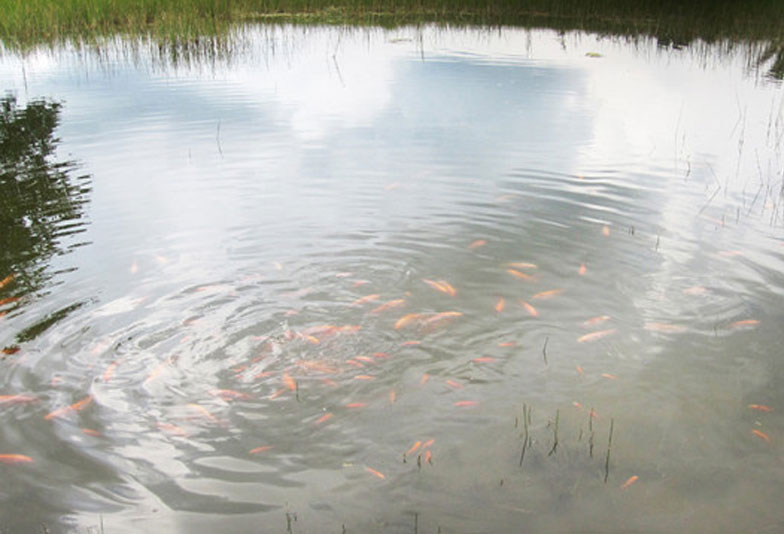
The Aquaculture Unit was started in 2008 to produce tilapia fingerlings in an effort to promote backyard fish farming in rural areas.  It was a four man unit and had to carry out its tilapia production on a privately owned farm.  The first tilapia produced were the Taiwan Red variety of the Nile Tilapia (Oreochromis niloticus).  The unit soon began to offer the public “all male” fingerlings.  These fishes are mostly males.  The reason we provide “all males” is to drastically reduce the unwanted reproduction of fingerlings in farmers’ ponds.
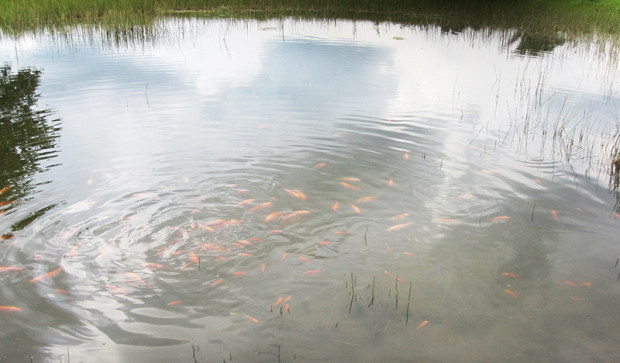
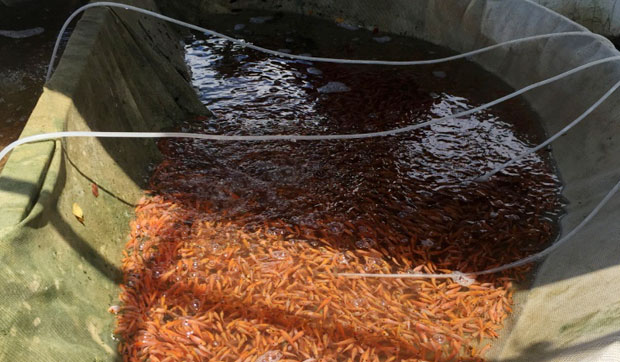
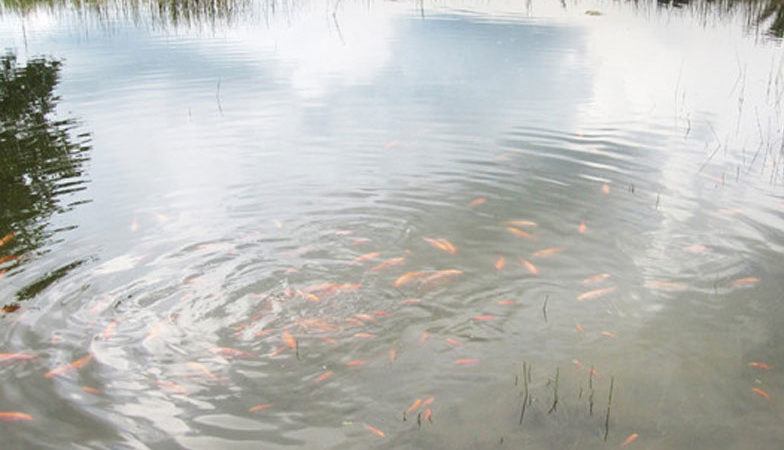
Tilapia ponds can get over populated as females and males begin to mate and reproduce continuously at 3 months of age.  By 2011 the unit was also offering the Gray Chitralada variety of the Nile Tilapia.  In 2014 the unit began operating from a government fish farm in Central Farm.  Its staff has grown in number.  The unit now offers extension services and training workshops to farmers as well as to supply them with fingerlings.

Activities

The main activities performed by the Aquaculture unit is as follows:

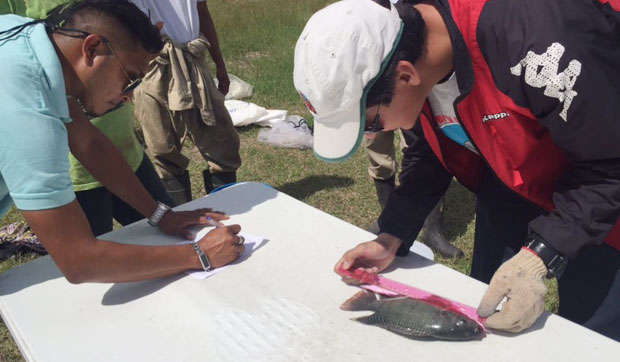
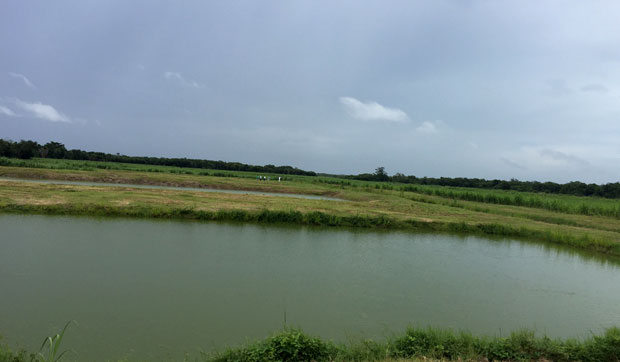
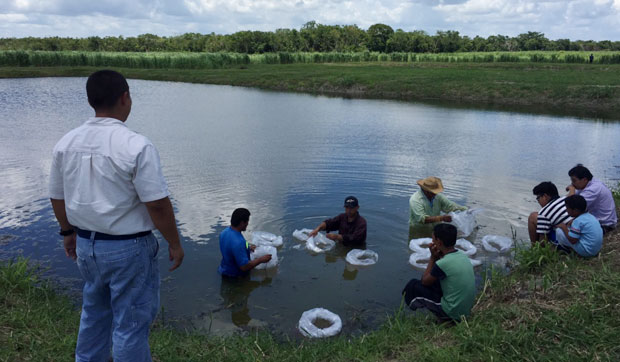
  1. Fingerling Production: The Aquaculture Unit operates the Tilapia Hatchery Centre.  At the THC, we maintain several breeder ponds, where large male and female tilapias are reared.  Tilapia fry are extracted from these ponds and placed in nursery for 6-8 weeks.  The fish that immerge are called fingerlings and are sold to fish farmers from all six districts.
  2. Extension Services:  The unit has three technical officers who travel around the country to provide recommendations on good fish farming practices to fish farmers.  The team also visits sites where farmers have interest in building fish ponds so that the proper location of a pond can be assigned before the actual construction.
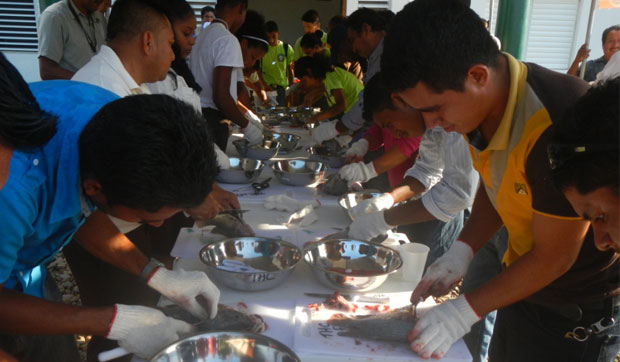
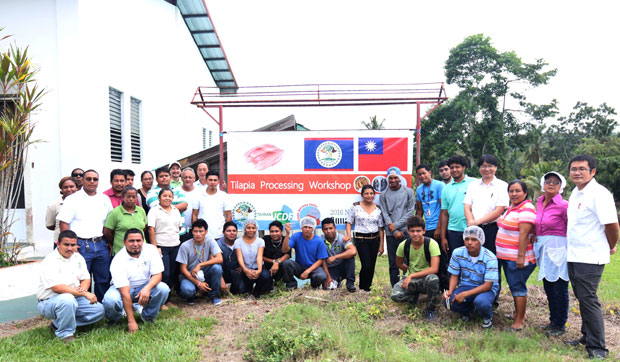
  3. Education/Training: The unit organizes two to three workshops every year for the benefit of farmers who have experience in fish farming and also other workshops for beginners.  The unit also receives school children at the THC whenever the work schedule permits.
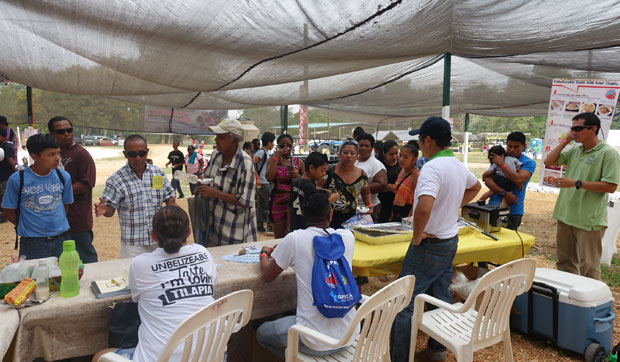
  4. Product Promotion:  The Aqua Unit participates in public events such as the National Agriculture and Trade Show and World Food Day event which is organized by the Agriculture Department.  In those events live tilapias are show case as well sold on market size.
  5. Research:  has been carried out on the preparation of an alternative fish feed at the THC as a substitute for commercial fish feed.  This alternative feed was prepared to replace the 32% Protein Content commercial feed.  Tilapia growth was found to be comparable to that of fishes with commercial feed.
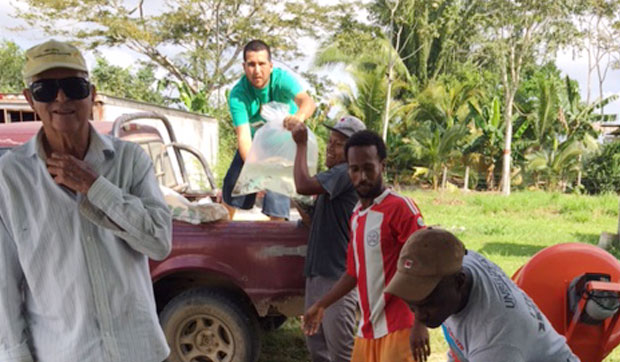
  6. Sale of Tilapia fingerings:  Size 2-3 grams each with a price of 15 cents BZ.  Fingerlings are pre-ordered and no delivery is included.

Future Activities

Plans are being made for research into the reproduction of Baysnook (Petenia splendida) in aquaculture.

Contact Information

Email: secretary.aquaculture@agriculture.gov.bz

Aquaculture Coordinator
Mr. Miguel Sosa: Email: miguel.sosa@agriculture.gov.bz

Aquaculture Officers
Mr. Neri Bol: Email: neri.bol@agriculture.gov.bz
Joe Saravia: Email: saraviajoe86@yahoo.com
Collaborators

  • Agriculture Department
  • Belize Agriculture Health Authority

Research and Development

Research and Development

Goal

The Research and Development Unit goal is to Promote sustainable practices in horticulture crop production. Address the research needs of the agricultural sector through R&D networking.

Background

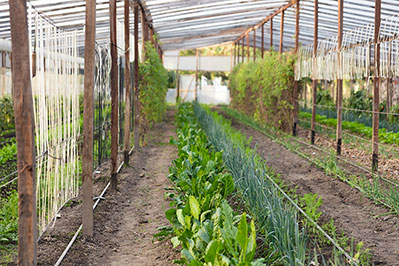
The Central Farm Research and Development is a centralized station compromised of five main sections: Administration, Livestock, Crops, Agro-processing and Agriculture Engineering.

Activities

  1. Research under cover structures/Open Fields
  2. Variety trial for various Crops
  3. Pesticide Efficacy Trial
  4. Validation of seeds varieties
  5. Promote efficient weed control system in exotic fruit production.
  6. Execute Pesticide Efficacy Evaluation in main horticulture crops (Cucurbits,Crucifers and Solanaceas) using Good Pesticides Management Practices.
  7. Promote backyard garden in Belize and utilize farm resources in an efficient manner to produce healthy and quality vegetables.
  8. Production of Organic Fertilizers

Find us on Facebook

Services

The unit serves as a research and demonstration center which provides services and training to student, farmers, farmers group, cooperatives, extension agents and NGO’s.

Future Activities

  1. Facilitate the development of Five garden centers to support Ministries of Agriculture and Education Initiatives
  2. Central Farm Small Scale Agriculture Demonstration site
  3. NATS show grounds Agriculture display model/Demo Site
  4. World Food Day School Garden Demonstration and Training Model

Contact Information

Director of Research and Innovation
Ina Sanchez – ina.sanchez@agriculture.gov.bz

Horticulture Technicians
Harold Westby – hwestby@agriculture.gov.bz
Samuel Cocom – samuel.cocom@agriculture.gov.bz
Alberto Gutierrez – agutierrez@agricuture.gov.bz
Gary Ramirez – gramirez@agriculture.gov.bz

Collaborators

  • Ministry of Agriculture
  • CARDI
  • Pesticide Control Board
  • BAHA
  • OIRSA
  • Taiwan Technical Mission
  • CATIE
Link Enlarge

Honey

Honey

Goal

To promote and facilitate the growth of the Honey Industry to meet the domestic market demand.

Background

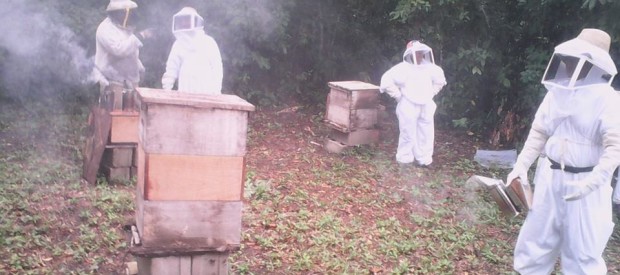
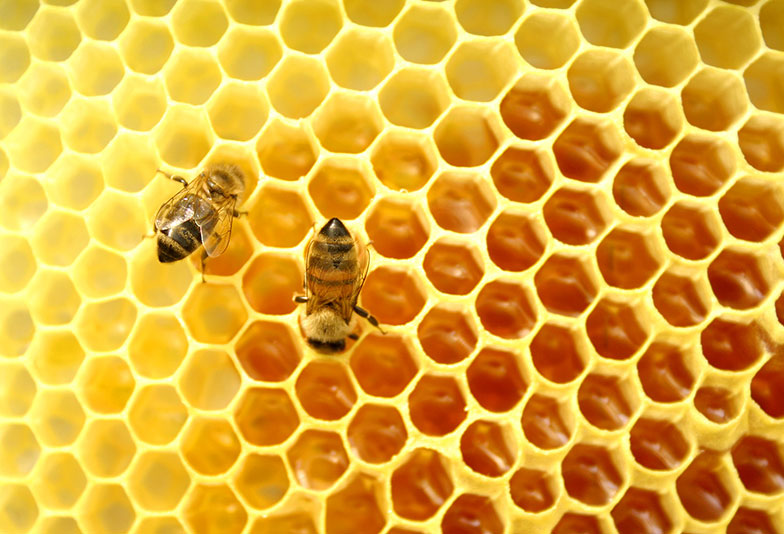
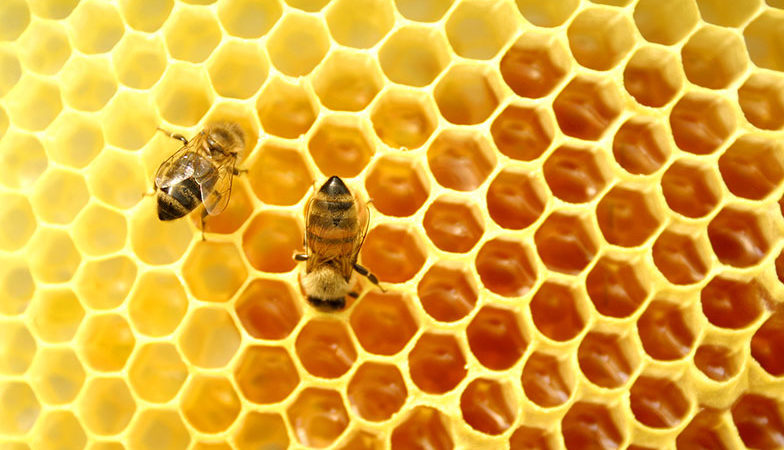
Even though honey has been in production in Belize since the early Mayan civilization, commercialization of honey began in 1959 with the introduction of Apis mellifera (Honey carrying Bee) which was brought in from Mexico as pollinators of sugar cane. In 1987 Apis mellifera scutellata or Africanized honey bees (AHB) was detected in Belize. This event drastically increased the production of honey production in Belize.

Honey is produced throughout the country with majority of the outputs occurring mostly in the Orange Walk and Cayo District. All of Belize’s honey is consumed locally. Belize is currently not exporting any honey mainly because the existing co-operatives can only supply the local market.

Five related or by products of honey include Pollen, Propolyst, Solid Man, Wax and Royal jelly. The main uses of honey are in cooking, baking, beverages, sweeteners and medicine.

Activities

  1. Some of the major activities performed by the Apiculture Office in the Ministry are:
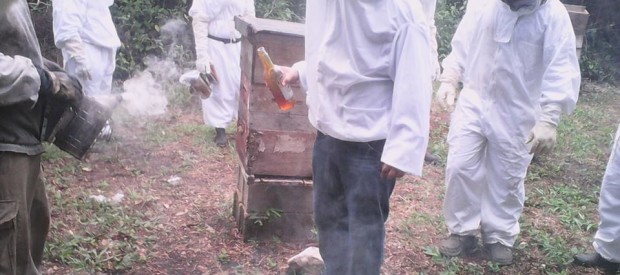
  2. The training for beekeepers and stakeholders Provide in good management practices (GMP) which includes Production, disease management and control.
  3. The capacity building of beekeepers in the processing and packaging of honey for value added and marketing.
  4. The implementation of a National Honey Certification Program.
    The implementation of a control and treatment program for the Varroa Mite.
  5. The revitalization of the National Bee Council.
  6. The Conservation of flora and reduction of fires fostered through a more sustainable use and protection of natural resources
  7. The Facilitation of beekeeping materials and equipment’s

Contact Information

Belize District – 203-2842
Cayo District -804-2129
Corozal District -402-2297
Orange Walk District -303-2019
Stann Creek District -502-2514
Toledo District -702-2689

Collaborators

  • Pesticide Control Board
  • Cooperative Department
  • Honey Cooperatives
Link Enlarge

Beef / Dairy

Beef/Diary

Objectives

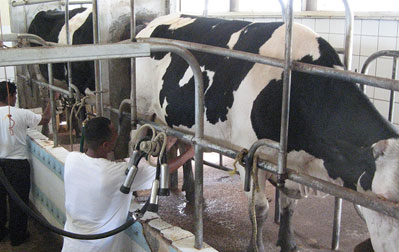
The main objective of the Livestock Station is to promote, support and facilitate Livestock Development using appropriate technologies to increase quality production, productivity and the expansion of production through diversification and value adding.

Background

The Ministry of Agriculture continues to play a major role in facilitating and promoting the development of the National Livestock Industry through the provision of both superior genetic breeding stock (swine, sheep and goats and dairy and beef) as well as technical support services and training provided to producers through the extension service and our partners in development.

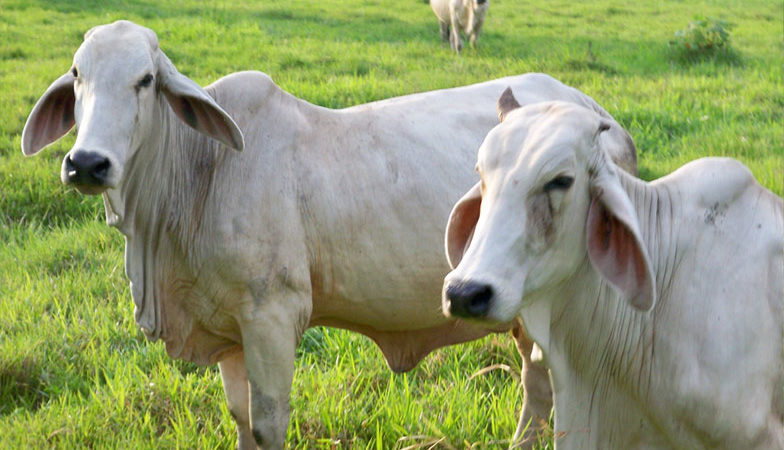
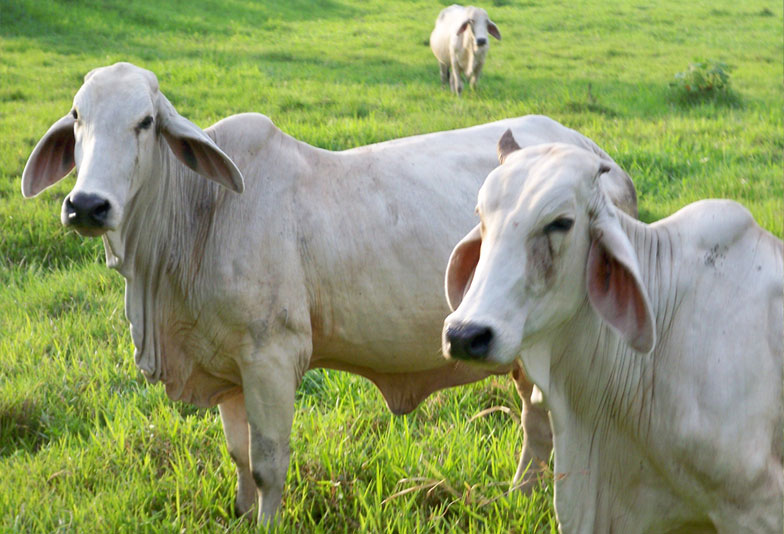
Currently some of the cattle breeds that are being breed are Red Angus which is used for the production of meat for tourist industry and Pure Brahman for the improvement of performance and productivity of the livestock sector.

For the production of the sheep industry, the Ministry has been working in crossbreeding the Barbados Black Belly and Dorper sheep with the Boar goat in order to promote the production and export of meat. Moreover, for the swine sector, the Ministry is breeding the Landrace and Large White breeds to remain as foundation breeds for the production of quality pork in Belize.

The Ministry of Agriculture has four livestock stations located in Cayo (Central Farm), Orange Walk, Stann Creek and Toledo.

Activities

Some of the main activities performed by the unit are:

  1. Pasture Improvement for breeding stock with the aim of increasing quality, production and productivity of meat and milk through improved grasses and legumes.
  2. Genetic Improvement to improve the quality of the local cattle stock in Belize and ensure the continuous supply of superior breeding stock to producers through the use of Registered Bull.
  3. Artificial Insemination for Beef to improve the quality of the local cattle stock in Belize in order to ensure the continuous supply of superior genetic stock to producers through registered semen.
  4. Natural Breeding of Swine to improve the quality of swine herd in Belize and increase production and productivity through purebred, line and cross breeding.
  5. Natural and artificial breeding of small ruminants to increase production and productivity.
  6. Capacity building in the areas of Good Management Practices (GMP), animal health, and nutrition.

Contact Information

Cayo District (Central Farm)

Mr. Denzel Castillo – 804-2079/2129

Orange Walk District

Sergio Hernandez -303-2019

Belize District

Francisco Xiu -203-2842

Stann Creek District

Densford Mangar-502-2514

Corozal District

Leonardo Eck: 402-2297

Toledo District
Justaquio Tush -702-2689

Collaborators

  • Belize Agriculture Health Authority
  • Belize Livestock Producers Association
  • 1
  • 2

Contact Info

Address: H.M. Queen Elizabeth II Blvd., Belmopan City, Belize C.A
Phone: (501) 822-2241 / 42
Fax: (501) 822-2409
Email: info@agriculture.gov.bz

Highlights & Events

  • IICA Donates Agricultural Equipment to Ministry of Agriculture to Support Small Farmers Nationwide
  • Minister Jose Abelardo Mai Concludes Two Day Citrus and Coconut Industry Tour in Southern Belize

View All

Video

View All

Useful Links

✓National Meteorological Service
✓CZMAI
✓Pesticide Control Board
✓BAHA
✓IICA
✓OIRSA
✓CARDI
✓FAO
✓CATIE

Copyright ©2021 Ministry of Agriculture | Web Development by: IdeaLab Studios Digital Marketing **

Top